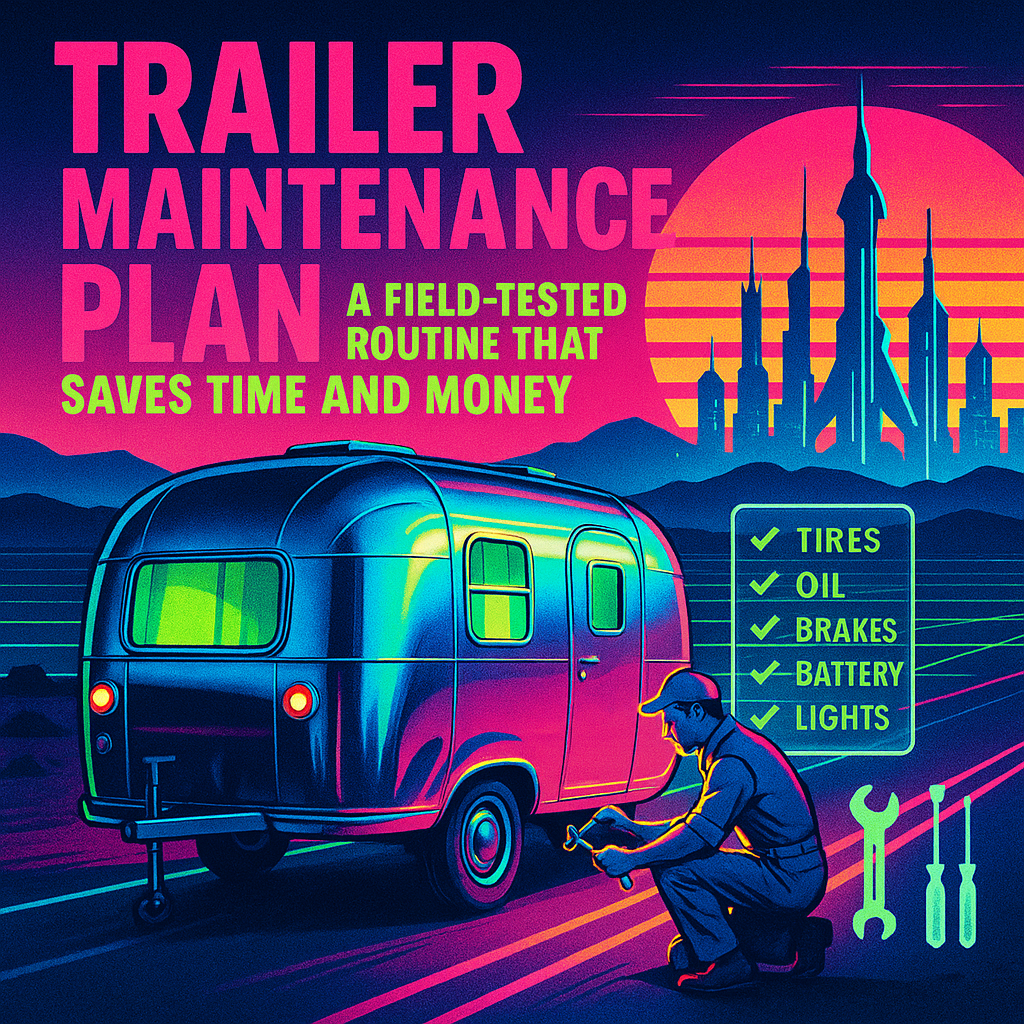
Trailer maintenance plan: a field-tested routine that saves time and money
I learned to respect a trailer the hard way. On a January job, a wheel bearing failure cost me a day, two workers’ wages, and a repeat trip to finish a job. After that, I built a trailer maintenance plan that fits a small crew and the real rhythms of work. This article lays out a practical, repeatable routine you can use today to avoid downtime and unexpected costs.
Why a trailer maintenance plan matters more than you think
Trailers are tools. When a trailer sits idle at the side of the road, it costs you in labor, schedule headaches, and client confidence. Preventive maintenance shrinks that risk. A simple, disciplined plan keeps trailers safe, compliant, and ready when the job demands them.
This isn’t about polishing chrome. It’s about checks you can do in 10 to 30 minutes that catch problems before they become breakdowns.
Build a weekly and monthly checklist that actually gets done
Start with two rhythms: quick weekly checks and deeper monthly inspections. Keep the weekly routine short so it happens; make the monthly check thorough enough to catch wear that weekly checks miss.
H3: The weekly quick check
Walk around the trailer before it leaves the yard. Check tires for proper inflation and obvious cuts. Test lights and turn signals with a helper or a tester. Look under the tongue and crossmembers for loose bolts or new rust. Confirm the coupler latches and safety chains are functional.
Do this every week, or before each trip if you haul less often. It takes 10 minutes. It saves a tow.
H3: The monthly deeper inspection
Raise the trailer if you can. Inspect wheel bearings and brakes. Check suspension hangers and fasteners for cracks or elongation. Grease fittings that need it and look for leaks around the axle seals. Tighten accessible bolts to torque specs where possible and record anything that looks like abnormal wear.
Put a simple sign-off sheet in the glove box or on the truck dash. Accountability matters. When someone signs, they own the check.
Focus on the failure points that cost the most time and money
Not all problems are equal. Prioritize items that stop you dead on the road.
H3: Tires and wheel bearings
Tires and bearings fail without warning if ignored. Check pressures cold, inspect tread and sidewalls, and replace tires that show uneven wear. Repack bearings on a schedule based on miles and loads. A bearing failure on the road rarely ends well.
H3: Lights, wiring, and couplers
Faulty wiring can get you a ticket or worse. Secure loose wires and use dielectric grease on connectors to keep moisture out. Inspect couplers and hitches for deformation. Replace bent or cracked components immediately.
H3: Brakes and suspension
Brakes that drag or don’t engage predictably create safety hazards and wear. Adjust and test drum brakes and top up hydraulic systems when needed. Inspect leaf springs or torsion axles for broken leaves or signs the ride has changed.
Practical recordkeeping that doesn’t slow you down
You don’t need fancy software to keep useful records. A simple paper log or spreadsheet works fine if you use it.
Keep these fields: date, trailer ID, odometer or hours, who checked it, and a one-line note of findings. Review logs monthly to spot trends, like a tire pattern that appears across trailers or repeated light failures on one harness. That trend spotting lets you fix root causes instead of chasing symptoms.
If you want to improve crew habits, attach a short checklist to each trailer and require a signature. When a name is on the log, people inspect differently.
Training and delegation: practical leadership in the yard
Maintenance succeeds when you assign clear ownership. Don’t assume someone knows what to check. Teach the quick weekly routine to every driver and have one person responsible for the monthly inspections.
A short, practical training session works better than a manual. Go through the walk-around with new hires on the first day. Show them what a bad bearing sounds like and how a cracked leaf spring looks. Reinforce the training every quarter with a hands-on refresh.
If you want to deepen team habits around responsibility and accountability, study basic leadership principles that translate to yard routines. Good leadership turns a checklist into a culture of care.
Use simple tools and parts inventory to cut response time
Keep a small kit of common spares and tools in the yard. Include wheel bearings, seals, light bulbs, and a spare hub. Store basic tools for quick swaps. When something fails on the road, most fixes are simple swaps if you have the parts on hand.
Standardize components across trailers where possible. Fewer part types mean fewer spares and faster repairs.
Also, when you document your trailer work online or in your business listings, think about basic seo best practices so your maintenance resources and policies are discoverable by prospective hires and partners.
Closing: a maintenance plan that pays for itself
A practical trailer maintenance plan costs time up front and saves money steadily. Weekly checks prevent roadside stops. Monthly inspections catch wear before it becomes a breakdown. Clear records and simple training turn maintenance into routine rather than crisis management.
Start small. Lock the weekly walk-around into the schedule and add the monthly inspection. Over a season, you will see fewer emergency repairs, more predictable scheduling, and a lower total cost of ownership. That is the kind of return that matters when trailers are your business tools, not toys.
Leave a Reply