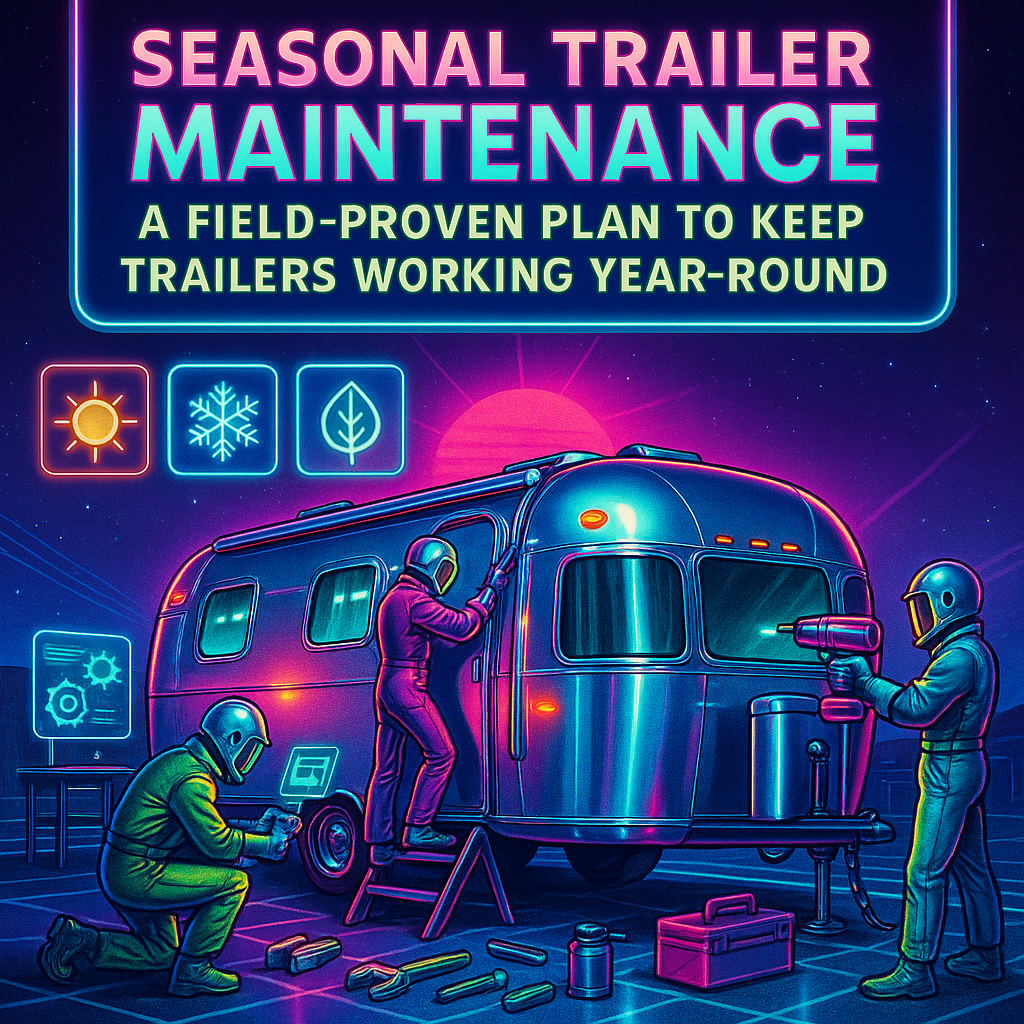
Seasonal Trailer Maintenance: A Field-Proven Plan to Keep Trailers Working Year-Round
I learned the value of seasonal trailer maintenance the hard way. On a wet November morning a loaded equipment trailer failed its bearings halfway to a job, and the delay cost a week of productive labor and a client’s trust. That break cost more than parts. It exposed gaps in planning, schedules, and who took responsibility for upkeep.
Seasonal trailer maintenance matters because trailers sit idle for parts of the year, face sudden weather changes, and carry variable loads. A short, predictable maintenance program protects assets, reduces downtime, and keeps crews safe on the road.
Start with a seasonal checklist that actually gets used
A checklist must match the work rhythm of your operation. Keep it short and time-boxed so crews will follow it. The checklist I use has four quarterly tracks: safety, running gear, electrical, and load integrity.
Safety. Verify lights, reflectors, breakaway systems, and tires. Check lug nuts for torque and tires for sidewall damage. Do a quick walk-around before every long haul.
Running gear. Inspect wheel bearings, grease fittings, brake shoes or pads, and suspension components. Replace small parts on the schedule, not when they fail.
Electrical. Confirm connectors, harnesses, and battery terminals are clean and protected from corrosion. Moisture kills wiring over time.
Load integrity. Inspect tie-downs, decking, and any ramps or winches. Replace worn straps and fix loose hardware immediately.
Make the checklist mobile. A one-page form attached to a clipboard works in the shop. A simple spreadsheet or basic task app works for small fleets. The point is consistency, not complexity.
Time maintenance around seasonal risk windows
Different seasons create different failure modes. Align inspections to those risk windows.
Spring. After salt and mud months, focus on corrosion and brakes. Wash the underside, flush contaminated grease from bearings, and inspect brake adjustments. Moisture-driven electrical shorts show up after winter.
Summer. Heat stresses tires and bearings. Measure tire pressure daily during hot spells and adjust loads if you see repeat overheating. Lubrication schedules often need shortening in high-heat operations.
Fall. Prepare for wet and cold conditions. Replace worn tires and check seals on toolboxes and hitches. Tighten any fasteners that expand and contract through summer.
Winter. Ice and road salt amplify corrosion and freeze points. Keep spare lighting and emergency gear accessible. Use corrosion inhibitors on exposed fasteners and inspect wiring connectors for water intrusion.
By targeting inspections to seasonal risk windows you catch problems when they become most likely, not after they cause a breakdown.
Build simple owner accountability into routine work
Maintenance fails when no one feels responsible for it. Assign clear ownership for each trailer and each task. Ownership does not mean a single mechanic handles everything. It means a named person signs off on the checklist and follows up.
At our shop, leads get a monthly summary of trailer status. If a trailer fails twice in a quarter for the same issue, the responsible person documents root cause and what change they made to prevent recurrence. That creates a feedback loop and improves operator behavior.
Develop a short incident template. Record the failure, immediate corrective action, estimated downtime cost, and the long-term fix. Over time this log becomes the best decision support for upgrade or replacement choices.
Good leadership makes accountability routine. It keeps maintenance from being an afterthought.
Reduce expensive surprises with targeted investments
You do not need to upgrade every trailer. Spend where failure costs are highest. For example, add heavier axles only if your loads justify their purchase by reducing downtime or increasing legal payload.
Two targeted upgrades pay off more often than a full fleet overhaul. First, improved moisture-resistant wiring and sealed connectors reduce intermittent electrical faults. Second, standardized spare kits—one per trailer—save hours when something fails on the road.
Track failure frequency and repair costs for six months before making big purchases. Data tells you where the cheapest reliability improvements live.
Mid-article resource note: if you manage online presence or want to share maintenance guides internally, basic seo practices help get the right documents in front of crews and partners.
Fast field repairs and the right spare parts strategy
The goal on the roadside is to leave with a safe, legal trailer. That may mean temporary fixes that allow a controlled return to base.
Carry a compact roadside kit: tie-downs, spare bulbs and fuses, a basic tool set, grease gun, cotter pins, and a compact hydraulic jack. For larger operations, equip two trailers with full spare-kits so a single event never halts a job.
Manage spare parts by Pareto. Keep spares for the 20 percent of components that cause 80 percent of downtime. Track part usage by trailer and reorder before you’re out. Avoid stockpiling slow-moving parts.
Train drivers and crew on approved temporary fixes and the required follow-up when they return. Document what was done and who signed off.
Closing: plan maintenance like it’s part of the job, not an interruption
Seasonal trailer maintenance becomes effective when it sits inside the operational rhythm. Short checklists, seasonal inspection windows, named ownership, targeted investments, and a pragmatic spare parts strategy cut downtime and protect margins.
When a trailer fails, you pay with time and trust. When you maintain deliberately, you invest in reliability. That makes scheduling predictable, keeps crews productive, and keeps clients satisfied.
Start with a single trailer. Run one season with the checklist and the incident log. You will learn what to change before you scale the program. That learning is the real return on maintenance.
Leave a Reply